


This is an excerpt from my forthcoming book on the doctrine of Free Will. I’m seeking to answer questions like: “Who am I? Do my choices matter? What is the nature of the human will? What does it truly mean to be human in God’s world?” I hope this whets your appetite for the full thing! Grab your copy on Amazon now!
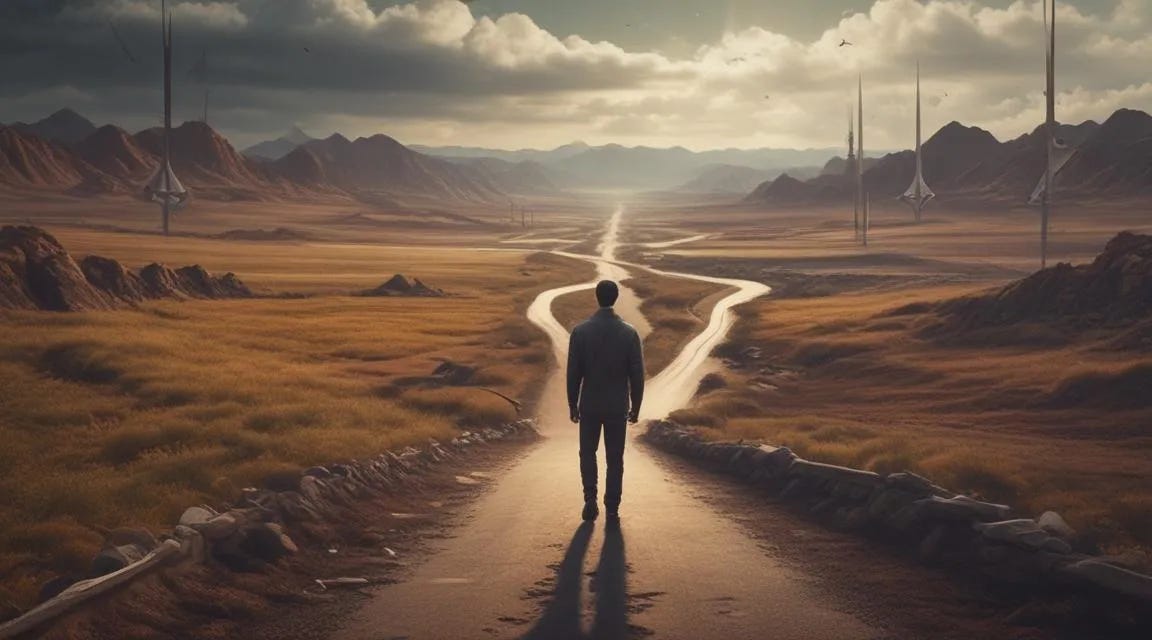
If you ask just about anyone on the street–regardless of age, social status, or ethnicity–whether humans have free will, odds are, they will respond with a resounding, “Of course!” So why even ask the question? Is it that important to explore the topic of free will in light of such wide agreement? Unfortunately, the concept of free will continues to be misrepresented and misconstrued. Frankly, what Christians often mean by “free will” and what the culture means often present a distorted picture. It’s time to reclaim and reform our understanding of it and resist these disorienting winds of doctrine.
In the early 2000s, the children’s soccer film, Kicking and Screaming, depicted the (hilarious) rivalry between two coaches who just so happened to be father and son. The not-so-athletic son sought to live up to his competitive father’s expectations but always fell short. At the beginning of the movie, the son begins narrating the story of his life: “I was born a baby–a blank slate, thinking I was in control of my own destiny. And then, I met my father…” The underlying frustration of some Christians is embodied by this quote. We naturally assume that I am in control of my own destiny, but there’s someone in the way–God the Father. Our felt experience convinces us that our choices are autonomous, independent of any internal or external influence, but then we bump our heads up against the Bible’s teachings about an all-sovereign God.
Swimming in the ocean of man-centeredness pervading our culture, Christians could be led to approach the Scriptures with the assumption that God’s will and man’s will are competing for space. Some give that space to God’s will at the expense of man’s will, and some give that space to man’s will at the expense of God’s will. But sadly, the idea of unqualified, unhindered free will is winning the day.
Of course, most, if not all true believers in Jesus will confess that God is in charge. They won’t deny God’s sovereignty as a reality or treat it as a problem, but at the same time, many merely give it a nod while preserving as much autonomy as possible. It’s probably because our experience doesn’t lie: You chose what toothpaste to use, you chose your shoes today, you chose to pick up this book. But what’s more, you “chose” to believe in Christ. Majoring in this can sometimes allow our experience to dictate how we read the Scriptures or view God Himself. How many of us have heard the classic statements, “God never forces Himself on us,” “God is always a gentleman,” “God never violates our free will, etc.”?
Therefore, some have sought to reconcile these things in a variety of ways, and this has given rise to a debate that has gone on for centuries, from the apostle Paul and his readers to Augustine and Pelagius, to Luther and Erasmus, to Whitefield and Wesley, to Olson and Horton, to Geisler and White. These debates were the seedbed for the spectrum of interpretations Christians have held. Here’s a brief overview of this spectrum:
Libertarian Free Will (Free Will Theism)
This view says that man has full, autonomous free will, defined as the power of contrary choice. While those who believe this say that man has prior influences, they can make decisions contrary to any prior conditions or factors that may influence their decisions. God gives His creatures full ability to make choices, including the ability to receive or reject His Son. Man’s choices are completely self-determined since God will not infringe upon man’s free will. In this view, man’s free choice is incompatible with God having a determined plan for history.
Hard Determinism
This view says that the events of history and man’s choices are necessarily determined by prior factors (sometimes, including God’s sovereignty) and will come to pass no matter what people do. Human freedom is simply an illusion. Whether caused by biology or God’s determined plan, man’s actions come about necessarily and not voluntarily, negating man’s responsibility. In this view, man’s responsibility or choice is incompatible with God’s determined plan (a view held by some versions of atheism and Islam).
Compatibilism
This view says that there is a dual explanation for all human willing and acting–God determines all that comes to pass in history, providentially working all things according to His secret counsel, but does so in a way that does not negate man’s responsibility. Man voluntarily makes choices–decides, believes, repents–and will do so (or not do so) according to his or her nature, whether redeemed by grace or enslaved to sin. Man’s free actions in no way make God contingent. In this view, man’s free choice is compatible with God’s determined plan for history (the perspective I will be writing from).
Most Christians would likely believe in some form of Libertarian Free Will; I’ll refer to them as “Libertarians” (not to be confused with the political party that goes by the same name). This is a view that pushes utter self-determination–God prizes man’s free will so much that He relinquishes some of His sovereignty. As libertarian Theologian Roger Olson puts it, “In free will theism, God is in charge (because he is God and therefore the omnipotent Creator of all) but not fully in control (because he chooses to relinquish some control to others).” It seems as though someone other than God is ultimately decisive in matters of decision-making and even salvation. Indeed, Olson confesses that “God is not the all-determining reality” of the universe. Additionally, and perhaps most surprisingly, the effects of the fall of man are greatly minimized, if not totally ignored, in the Libertarian view since, according to them, man has the full ability to respond positively to God, even in the state of sin.
Our Culture
Another reason we ought to reclaim and reform our understanding of free will is that our culture has produced many people who are seeking to define themselves. True freedom, according to our world, is the ability to define and create your own reality. Truth claims are often identified as “my truth” or “your truth.” We hear of those who desire to be self-determined, self-created beings. We’re enamored with the Disney-esque individualism seen in the mythological “self-made” man/woman. Carl Trueman writes, “The idea that we can be who or whatever we want to be is a commonplace…consumerist self-creation is the order of the day.”
Our culture worships autonomy. I’m in charge. I’m the one who calls the shots. I can do what I want with my body, my future, my destiny. As a result, the body becomes nothing more than a lump of clay to shape as we please, dreams are chased at the expense of those we love, and we construct our own reality regardless of the cost. It’s frightening to think how the perception of “free will” may be misconstrued in the minds of the little children who skip around singing, “It’s time for me to see what I can do, to test the limits and break through. No right, no wrong, no rules for me, I’m free.”
A Way Forward
I will argue that the story of man’s will is a revelation of God and the image that He created for His own glory. This is the story of the freed will–a story of image-bearers who became enslaved but then freed by grace and will one day be completely free as they live in unhindered oneness with their Creator. My aim in this little book is to show you that the key to understanding free will is to see it from the angle of the Imago Dei (Image of God), which is part and parcel of God’s blueprint for humanity. We must not start with our experience and reason our way up to God, but start with God and reason our way down to our experience. Only when we behold His sovereign design, recognize man’s fallen state, and savor Christ’s redemption will we truly understand what it means to be human and come to reflect His glory once again.
Getting this right matters greatly for your life. Pastor and author Scott Christenson lists out ways this topic impacts our understanding of major biblical themes:
Sorting out God’s role and our role in matters of salvation.
Making sense of how regeneration, conversion, and sanctification work.
Understanding how we should engage in evangelism and discipleship.
Building greater confidence in God’s providential purposes for both history and our individual lives.
I will seek to define “free will” biblically within a confessional framework and stir your heart to rejoice in Who is truly in charge, see how your actions matter, and be further conformed to the image of Christ, which is the basis of the freedom we enjoy now and will throughout eternity. Though we may not have answers to all of the hardest questions, the Scriptures provide sufficient answers to the most important questions we should be asking.
In Part One, we’ll seek to understand God and His decree (established before the foundation of the world), and how this decree establishes man’s natural free will or liberty. We’ll come to a working definition of “free will” and learn how the image of God relates to it. In Part Two, we’ll survey the various phases or states in which the image of God exists and address man’s will as it relates to sin and salvation. So fasten your seatbelts, put your seat in the upright position, and store your tray table in front of you–we’re going to travel back in time to the time when there was no time…
Part 1: Before the Foundation of the World
Chapter 1: Who is Most Free?